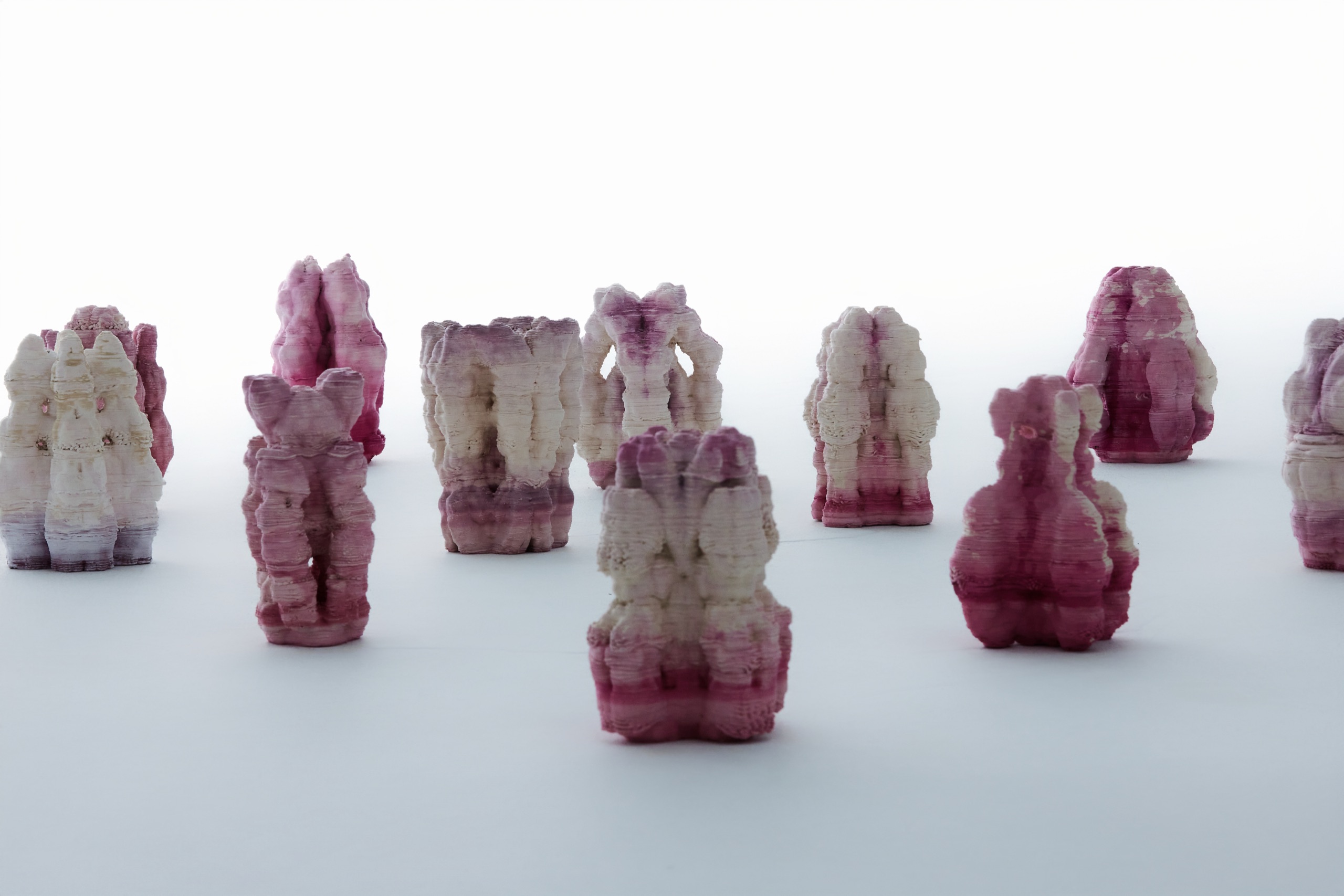
Halo-Tectonic
A ceramic interface for Birnbeck Pier, shaped by water. Computational design and clay extrusion develop textured surfaces for microalgal attachment, while experiments with salt crystallisation explore possibilities for biomass collection. An architectural fragment carries these material studies towards the tidal landscape.
Concept
The meeting of sea and structure is a place of continual material change. Water, salt and microorganisms leave traces, build deposits and reshape exposed surfaces. These processes become a starting point for imagining coastal architecture that makes room for attachment and accumulation.
Computation and ceramic fabrication explore how surface geometry can engage with these processes. Ridges, grooves and recesses are developed to guide water and provide potential sites for microalgal attachment. Salt crystallisation introduces a possibility for gathering biomass, informing a coastal interface where material, geometry and biological activity are considered together.
An intertidal ground
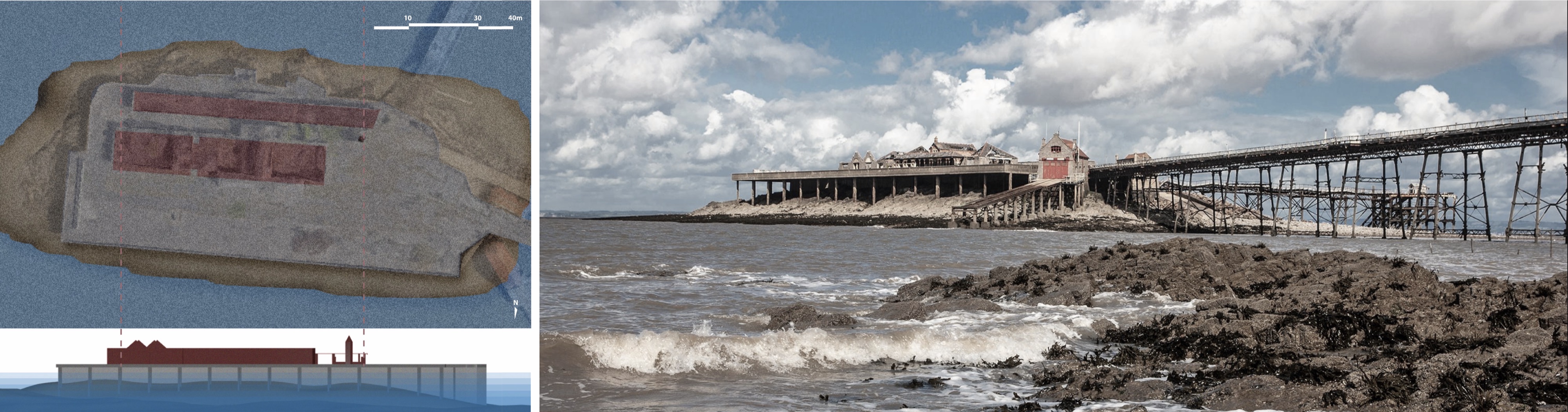
Birnbeck Island in the Bristol Channel is a limestone outcrop reshaped into an artificial platform and connected to the mainland by a nineteenth-century pier. Its weathered structures reveal the tension between fixed construction and a shifting tidal environment. This meeting of built ground and moving water provides the starting point for exploring ceramic surfaces that engage with wetting, salt deposition and biological attachment.
A receptive surface
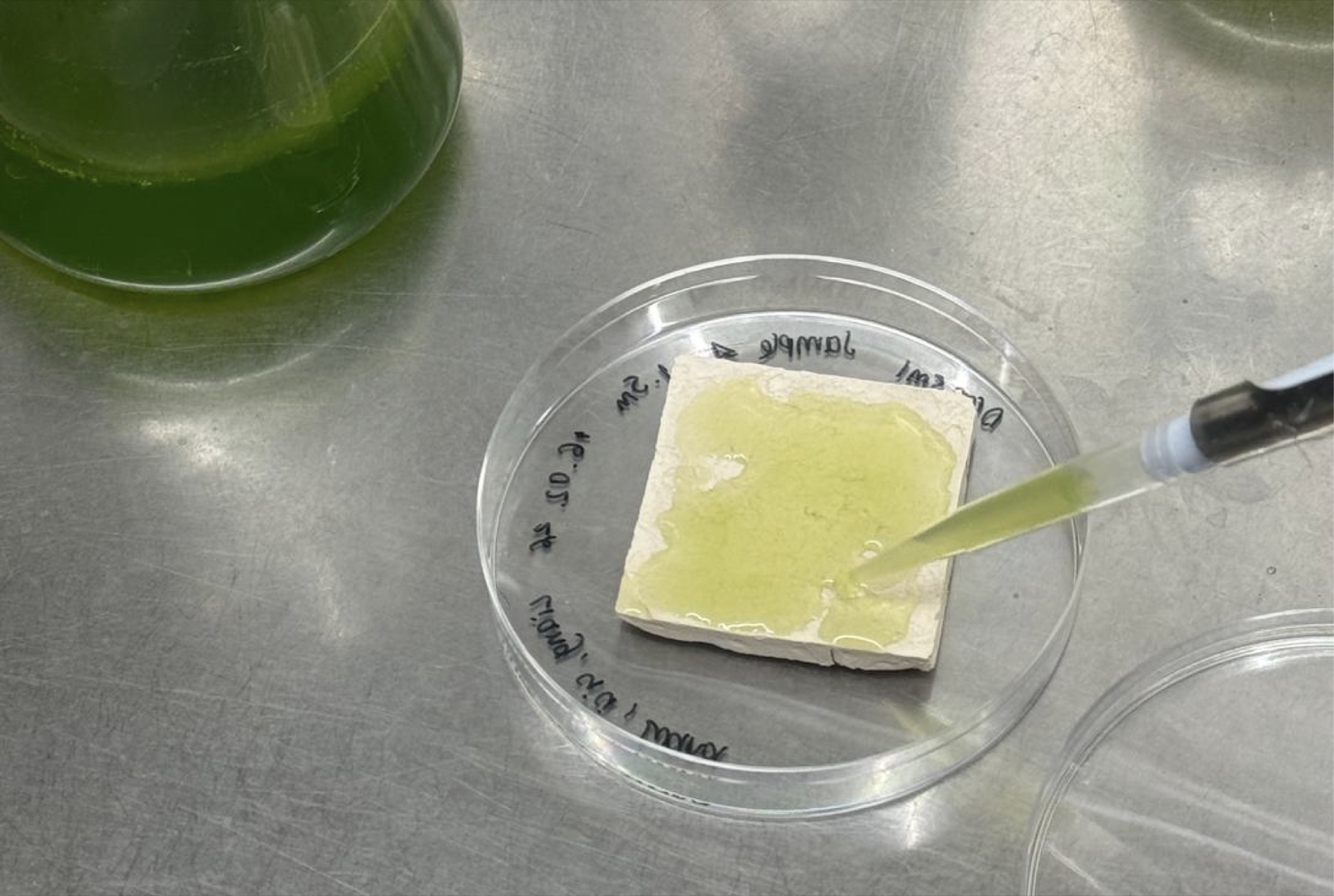
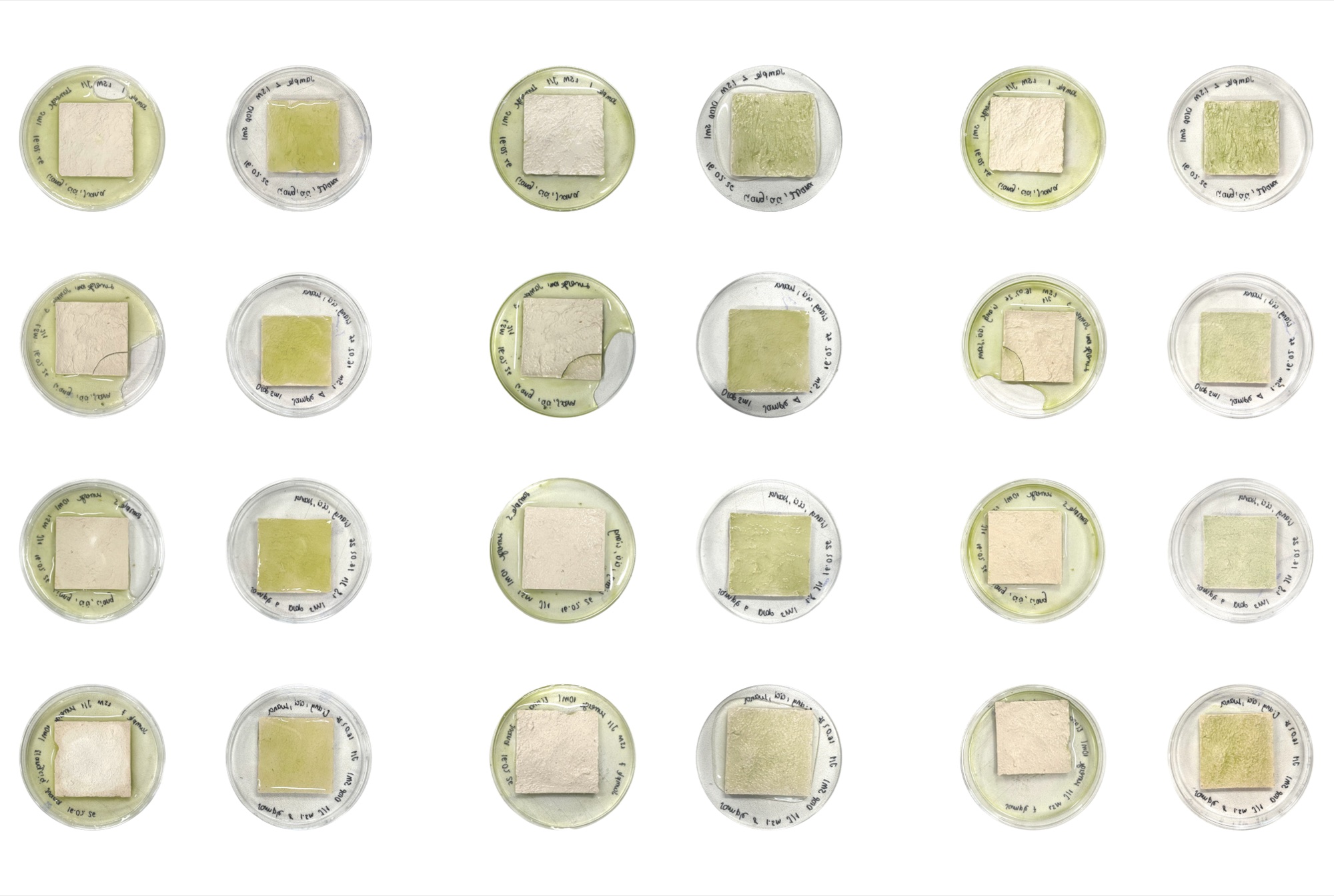
A receptive surface begins with how the ceramic takes up water and supports algal attachment. Different clay bodies were compared through water-uptake and saline dripping tests, followed by immersion and drop inoculation with Dunaliella salina. Visible coverage, distribution and persistence were assessed to identify a suitable substrate for further development.
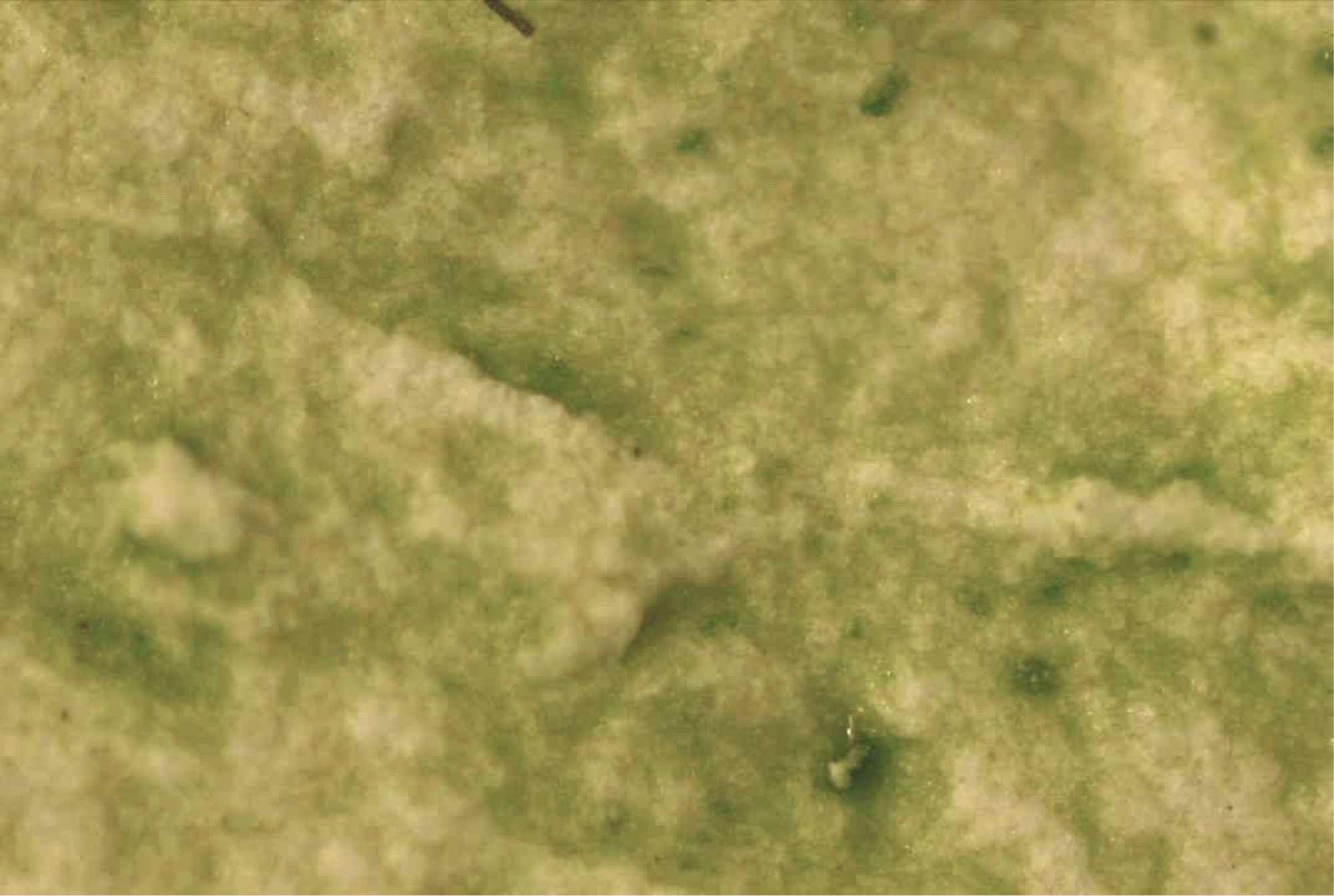
Under magnification, differences in algal distribution become visible across the ceramic texture. These observations, alongside the water-response tests, informed the selection of VB3 as the working clay body. With the material established, the next step was to explore how ridges, grooves and local depressions could shape water movement and create potential sites for attachment.
Geometry from water
Water movement informs the geometry of the ceramic surface. A parametric system varies the tile’s surface relief and orientation, while a genetic algorithm explores candidates using simulated water retention and solar exposure as evaluation criteria. The aim is to identify configurations that could sustain moisture and create conditions for microalgal attachment.
Ridge spacing, groove depth and direction provide ways to shape how water travels across the surface. Comparing the candidates reveals potential areas of retention and drainage, informing which geometries are taken forward. These selected forms become the starting point for fabrication, where their surface features must be reconciled with the limits of clay extrusion.
Printing the surface
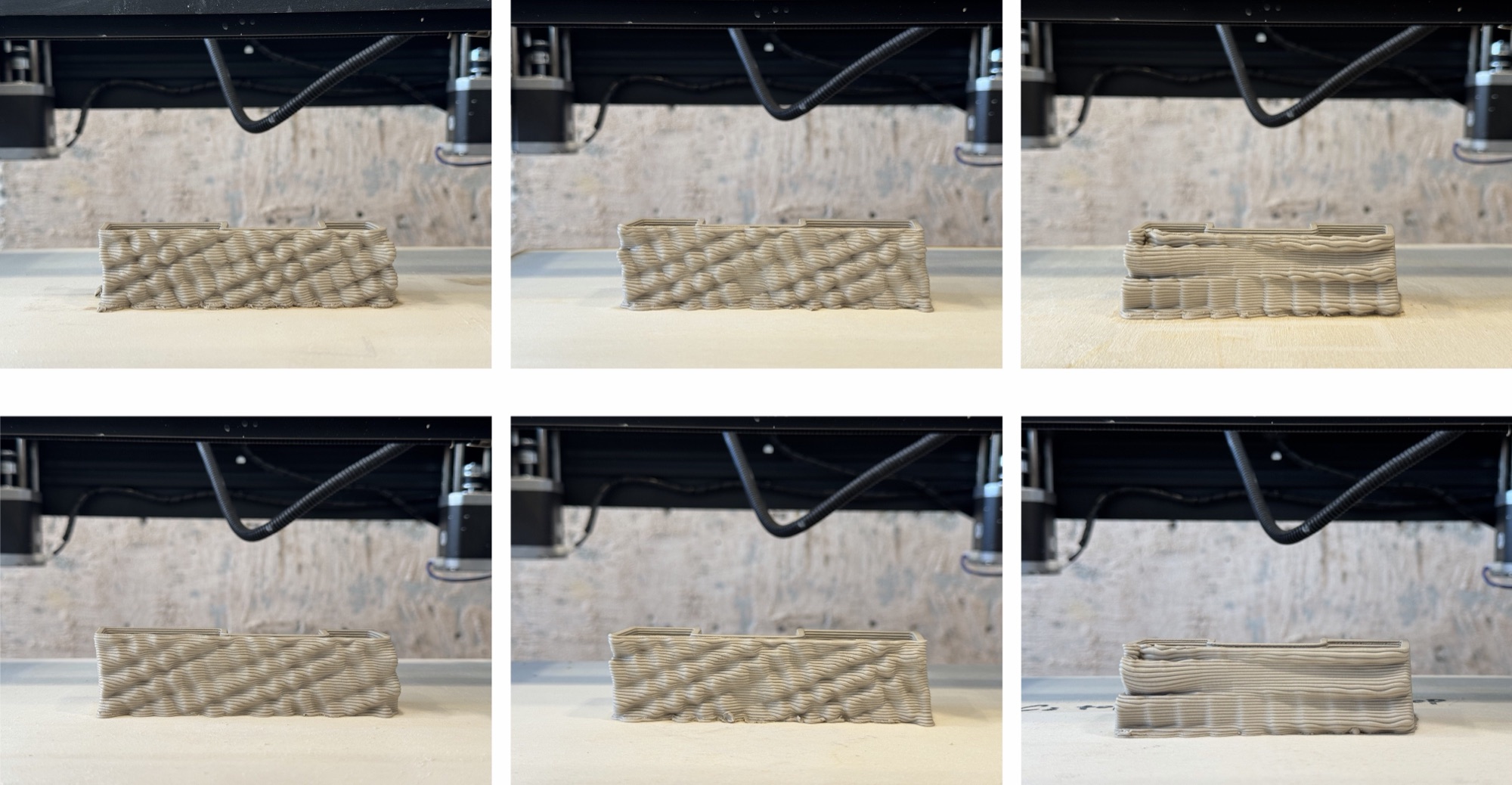
Computational geometries are adapted for three-axis clay extrusion. Overhangs and layer offsets are adjusted through test prints, balancing surface complexity with the support each deposited layer can provide. Toolpath refinement becomes a further stage of design, shaping the relief as it is built.
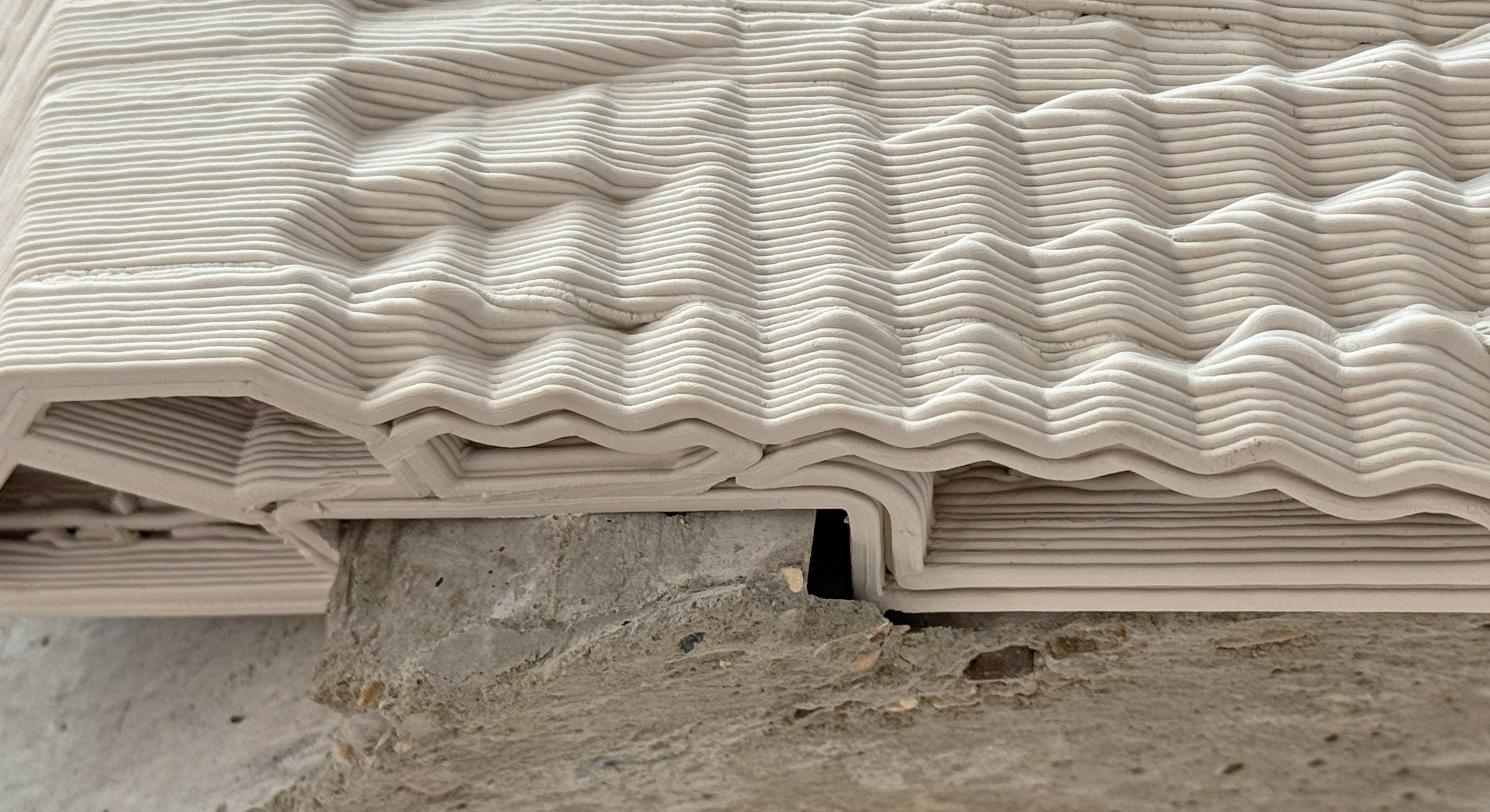
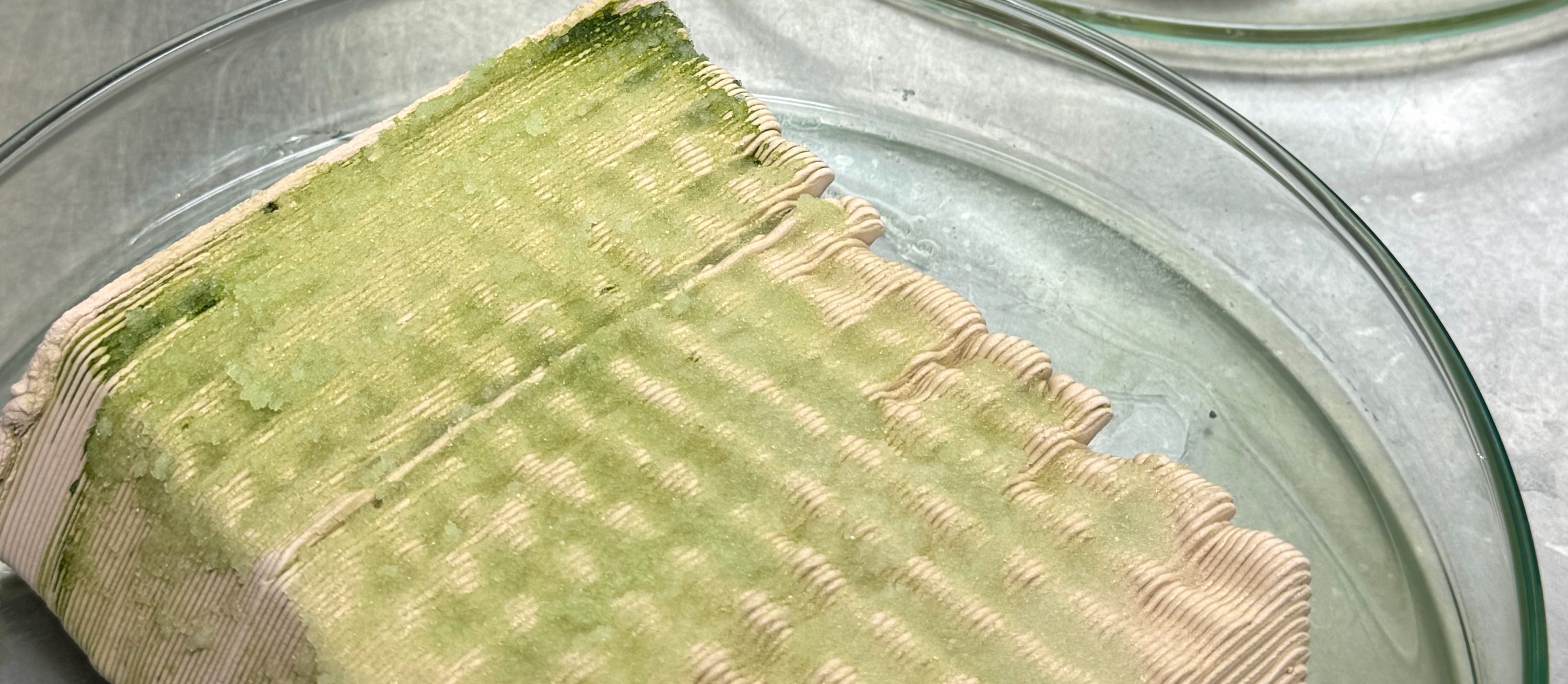
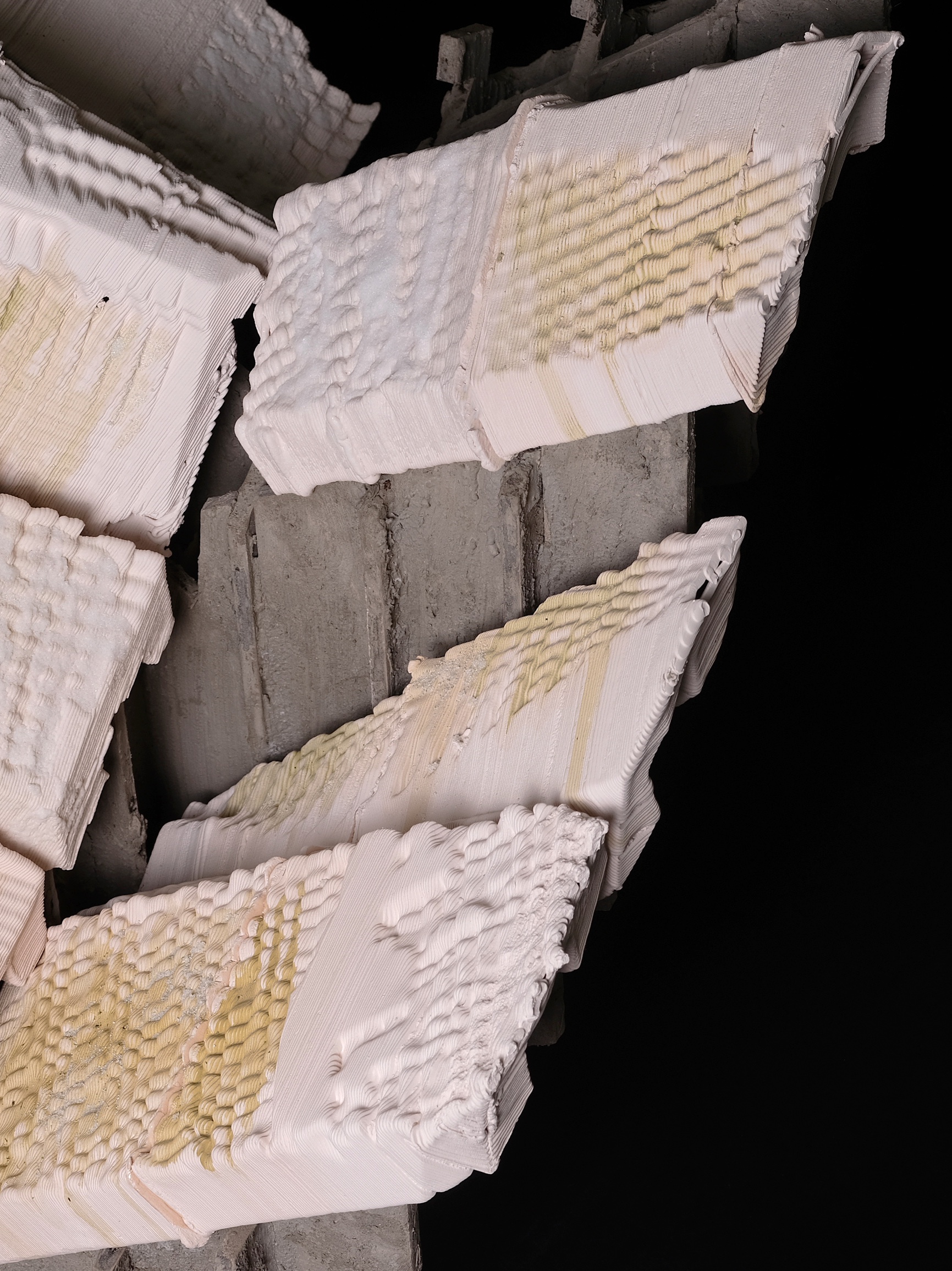
The traces of extrusion remain visible in the ceramic. Layered ridges and local recesses give the surface a finer texture within its larger geometry. These features carry the computational proposal into a physical material, ready for testing through direct contact with water.
Testing the tide
Printed ceramic surfaces are tested under controlled dripping and wave exposure. The tank brings the simulated geometry into contact with moving water, allowing surface wetting, local pooling and drainage to be observed across the ridges and recesses.
These tests explore how the printed relief redirects water and where moisture may persist between exposures. They connect the fabrication studies to the salt accumulation and algal attachment examined in the next stage.
Salt and settlement
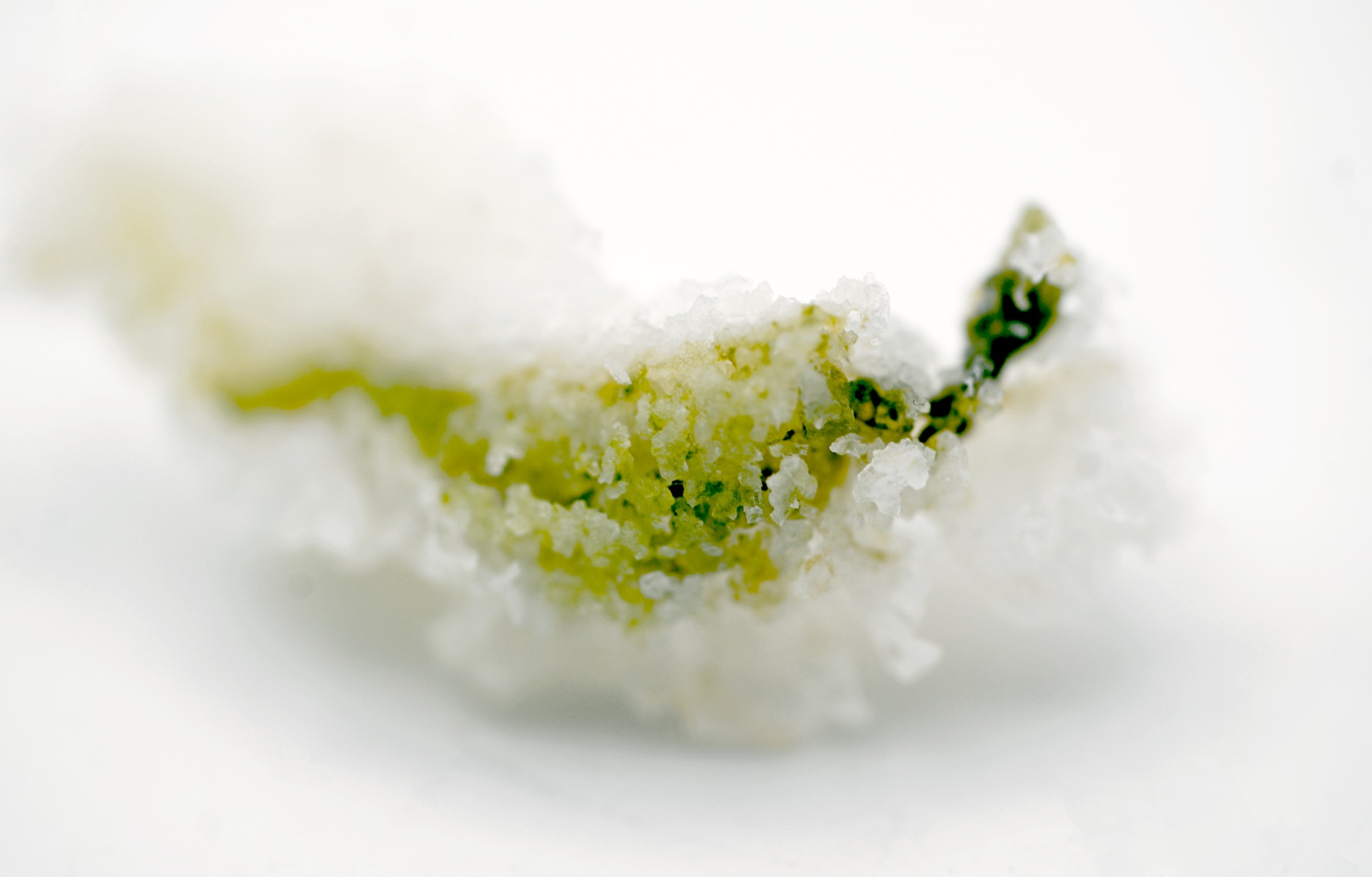
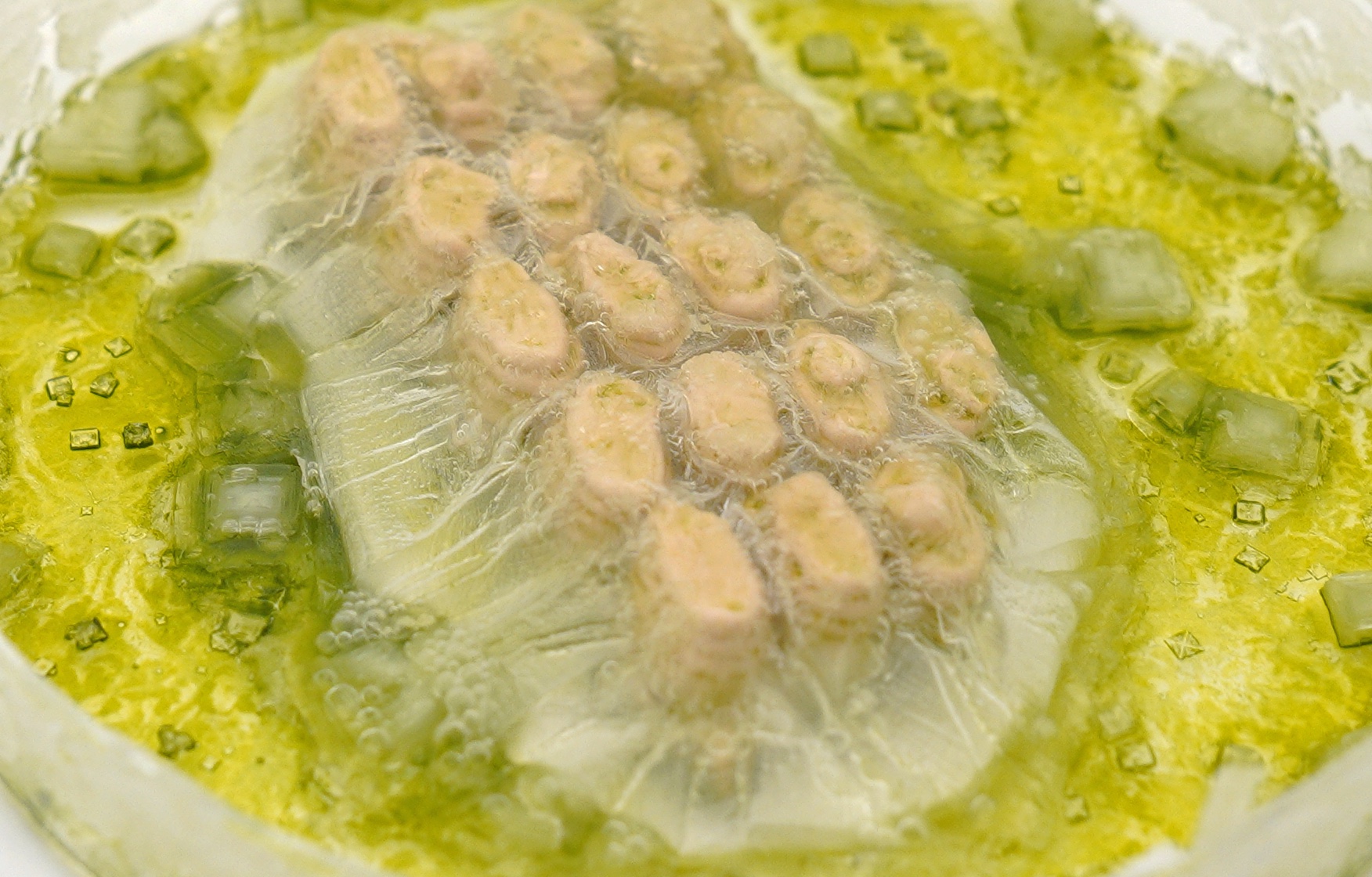
Salt crystallisation brings mineral deposits and algal biomass together. The experiments revealed green biomass concentrated within and around the crystal formations, suggesting a possible route for gathering dispersed biological material through evaporation and crystallisation.
The ceramic surface becomes an interface between water, salt and biological matter. Its ridges and recesses offer a terrain for exploring where deposits accumulate and remain. Collection emerges as a design possibility, with its efficiency and behaviour under coastal conditions still to be tested.
The architectural fragment
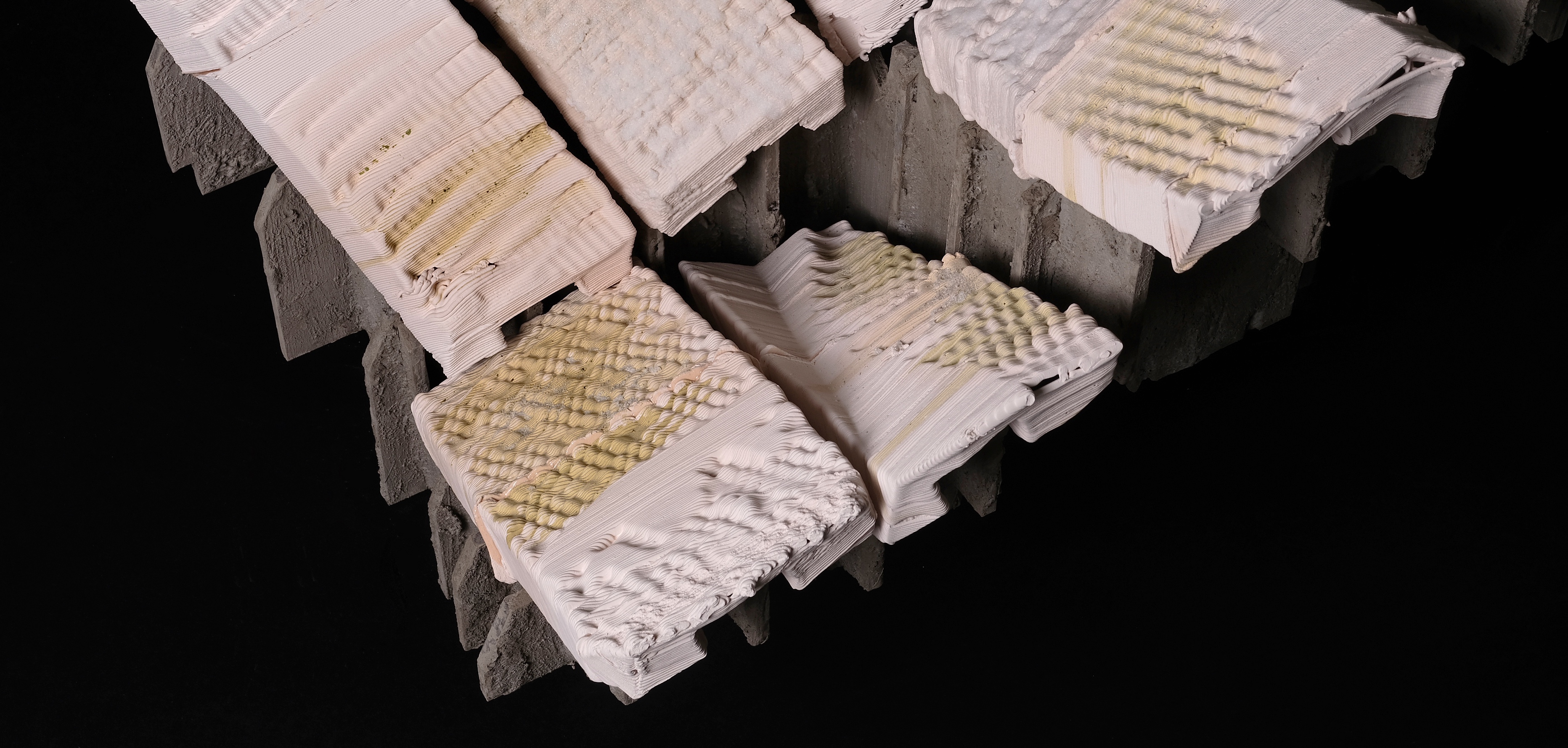
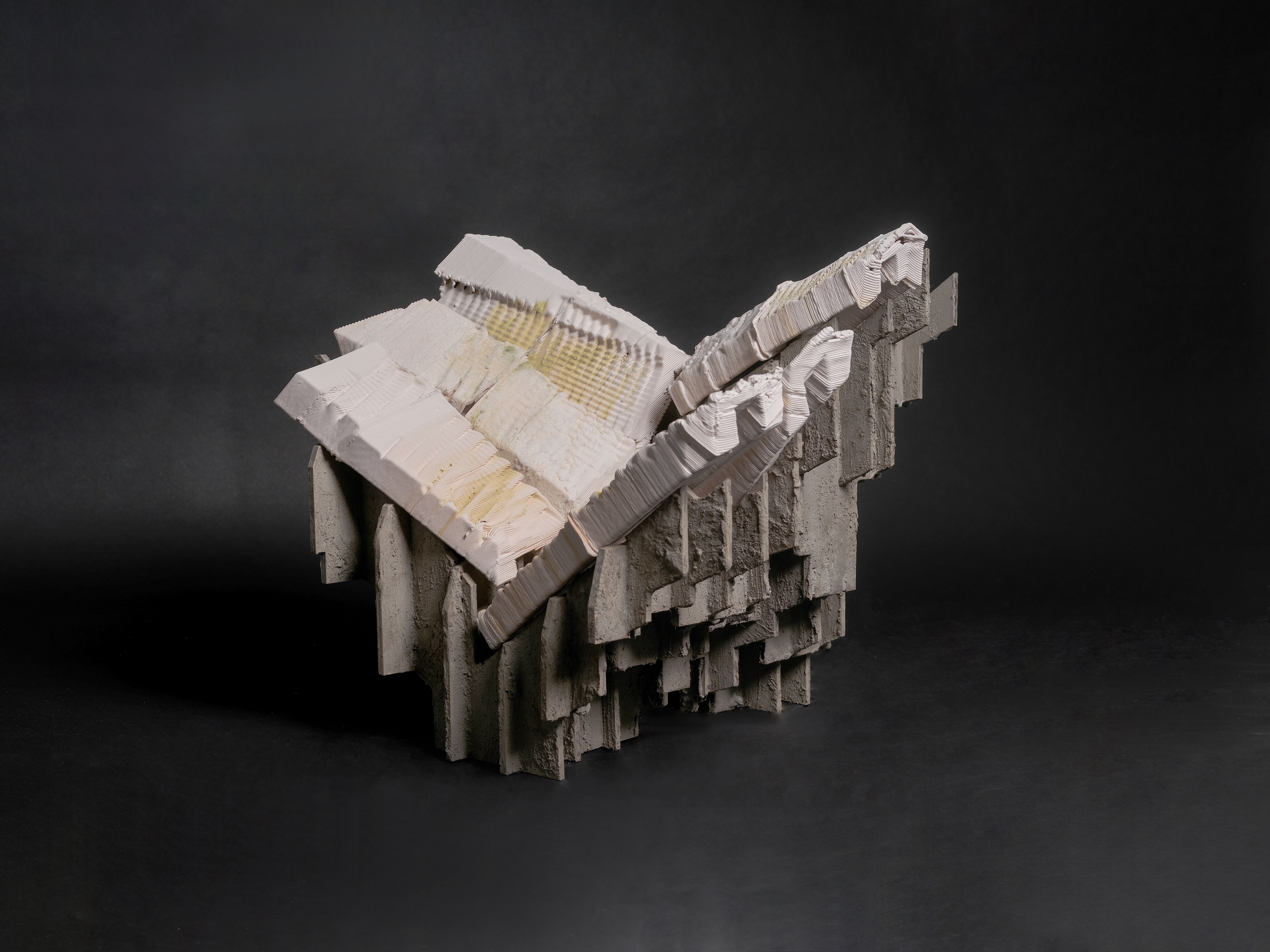
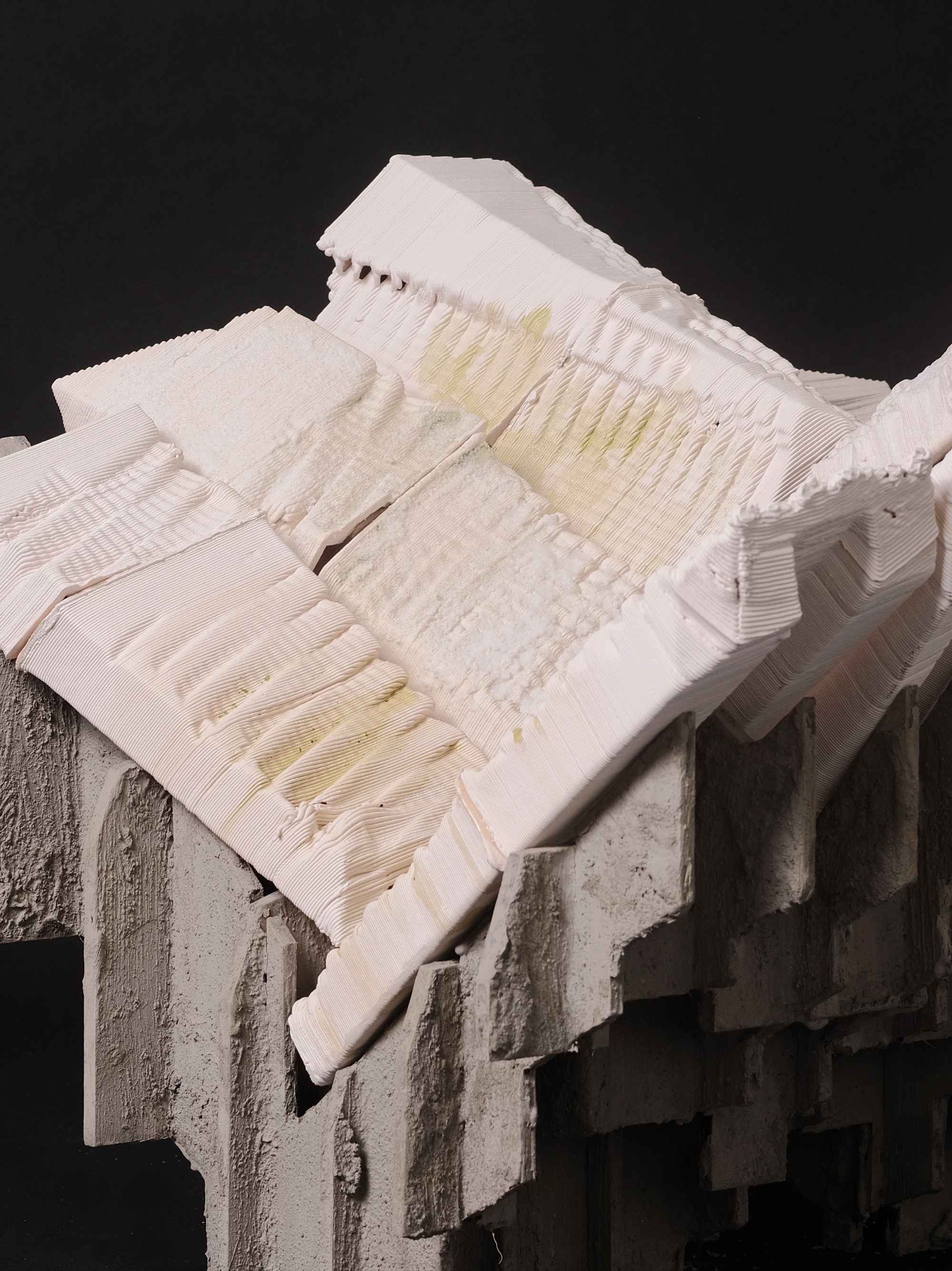
Individual ceramic surfaces come together as an architectural fragment. Set at varying angles on a cast concrete base, their ridges and recesses are arranged to intercept water and provide potential sites for microalgal attachment. The relationships between tiles extend this intention across a larger surface.
The assembly explores a coastal interface where water movement, algal attachment and salt crystallisation can work together. Its textured surfaces are intended to support the accumulation of biomass and salt, translating the collection possibilities observed in the experiments into an architectural proposition.
A coastal interface
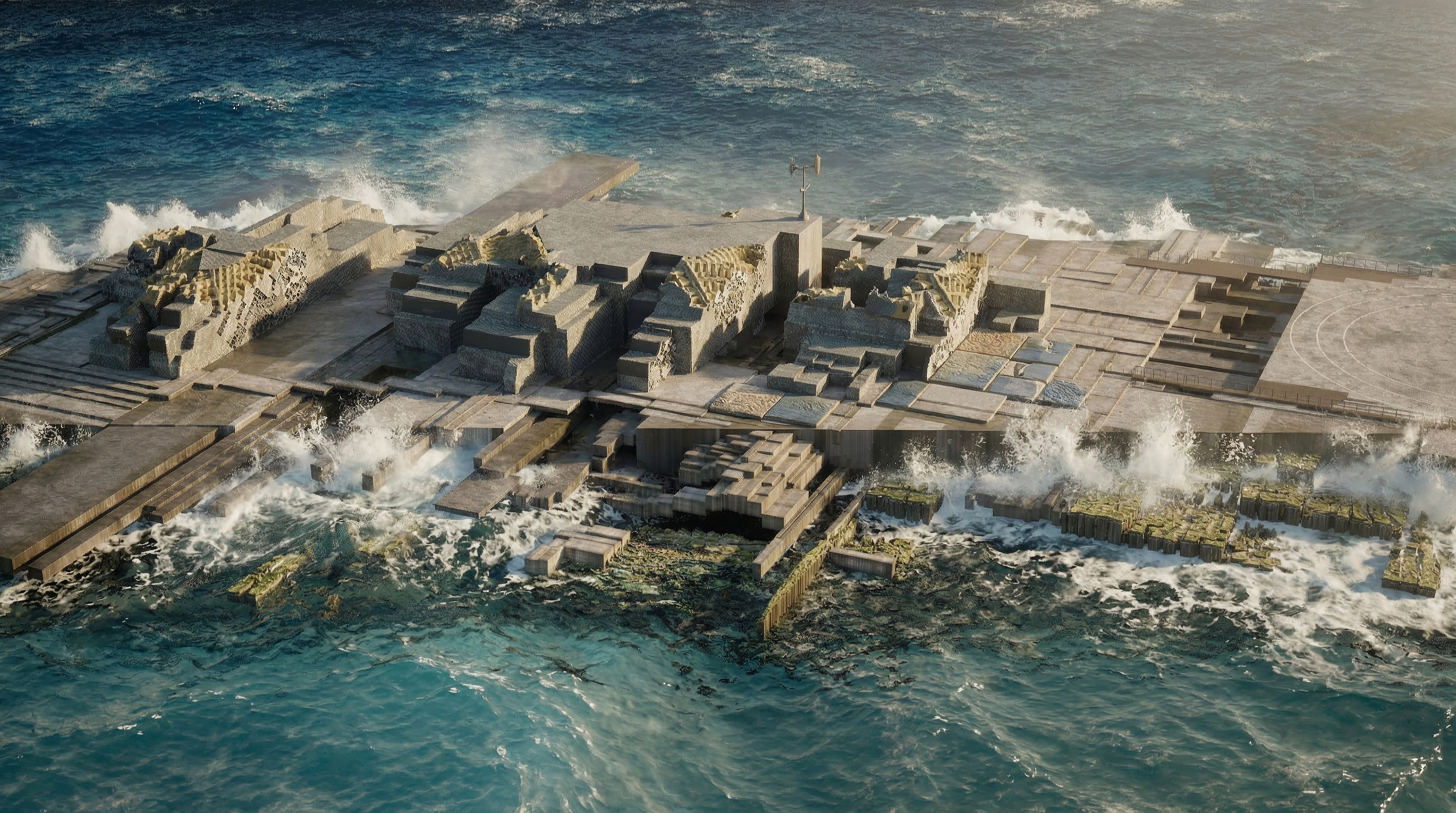
At Birnbeck Pier, the material investigations inform a proposed intertidal architecture. Ceramic tile clusters articulate inclined surfaces and stepped coastal edges, mediating contact with rainfall, tidal flows and wave splash. Their distribution and orientation establish differentiated zones of exposure, linking surface geometry to the site’s hydrodynamic conditions.
The ceramic assemblages are conceived to support microalgal attachment and localised biomass accumulation, with salt crystallisation explored as a potential collection mechanism. The proposal translates these experimental principles into an architectural strategy, connecting the relief of individual tiles to the configuration of a biologically receptive coastal interface.
Junpeng Liang, 2026
With Pin Hsi Sung and Juana Valentina Corredor Rodriguez, thanks to Yagmur Akyüz