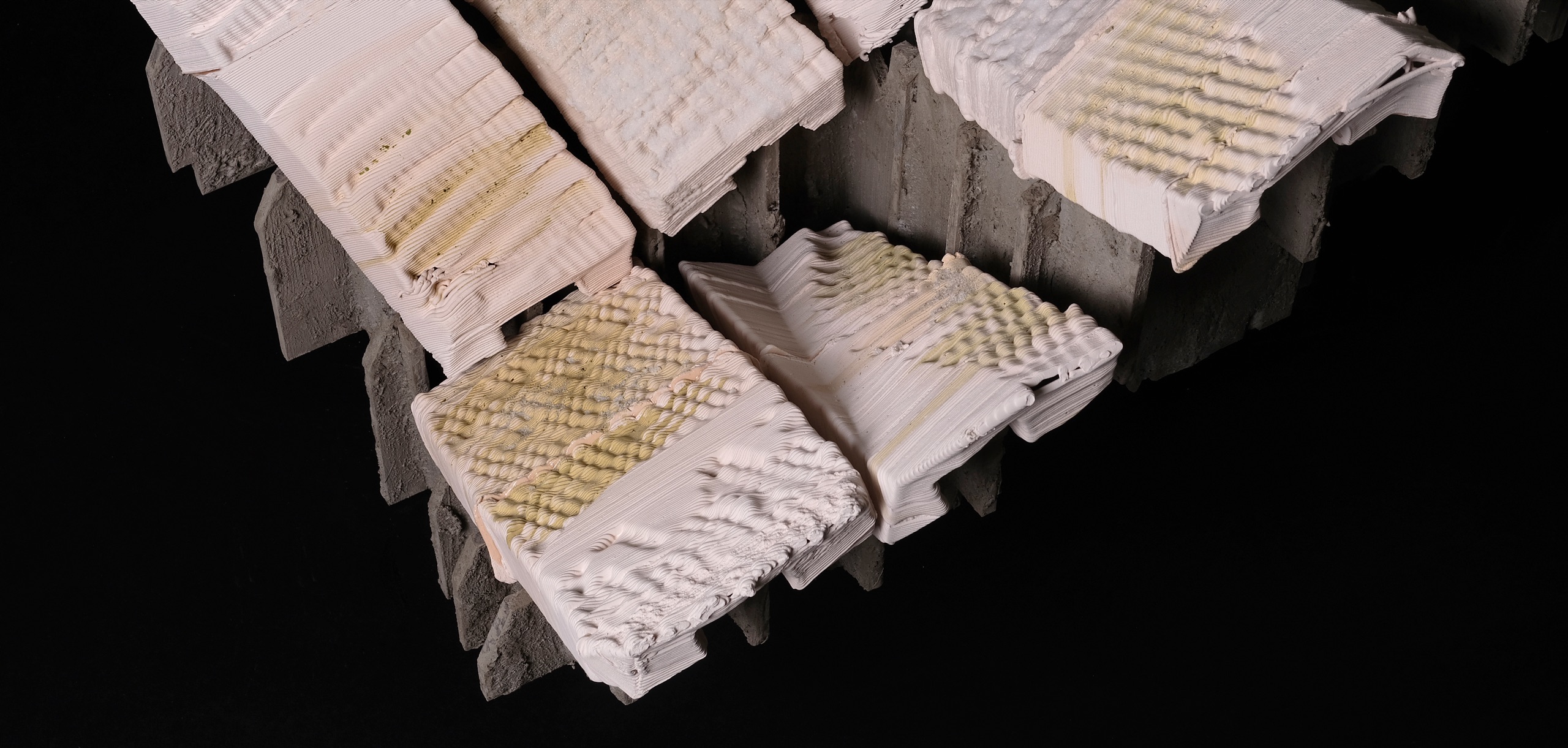
Picowgtuna
An animal body becomes a catalogue of desirable traits. Within a fictional breeding industry, pigs are redesigned around demands for food, materials and organs. Speculative lineages, bespoke anatomies and physical specimens expose how the pursuit of utility reduces living beings to configurable products.
Concept
The pig is approached as a body whose value is distributed across meat, skin, organs and other biological materials. Consumer demand becomes a force acting on anatomy, privileging traits according to their usefulness. This instrumental view provides the basis for a speculative future in which the animal itself can be commissioned to specification.
A fictional breeding enterprise translates medical, industrial and food-related demands into customised bodies. Selective breeding and imagined biotechnological interventions are presented through genealogies, order records and anatomical models. Their administrative precision frames an ethical tension between commercial optimisation and the integrity of a living organism.
Directed descent
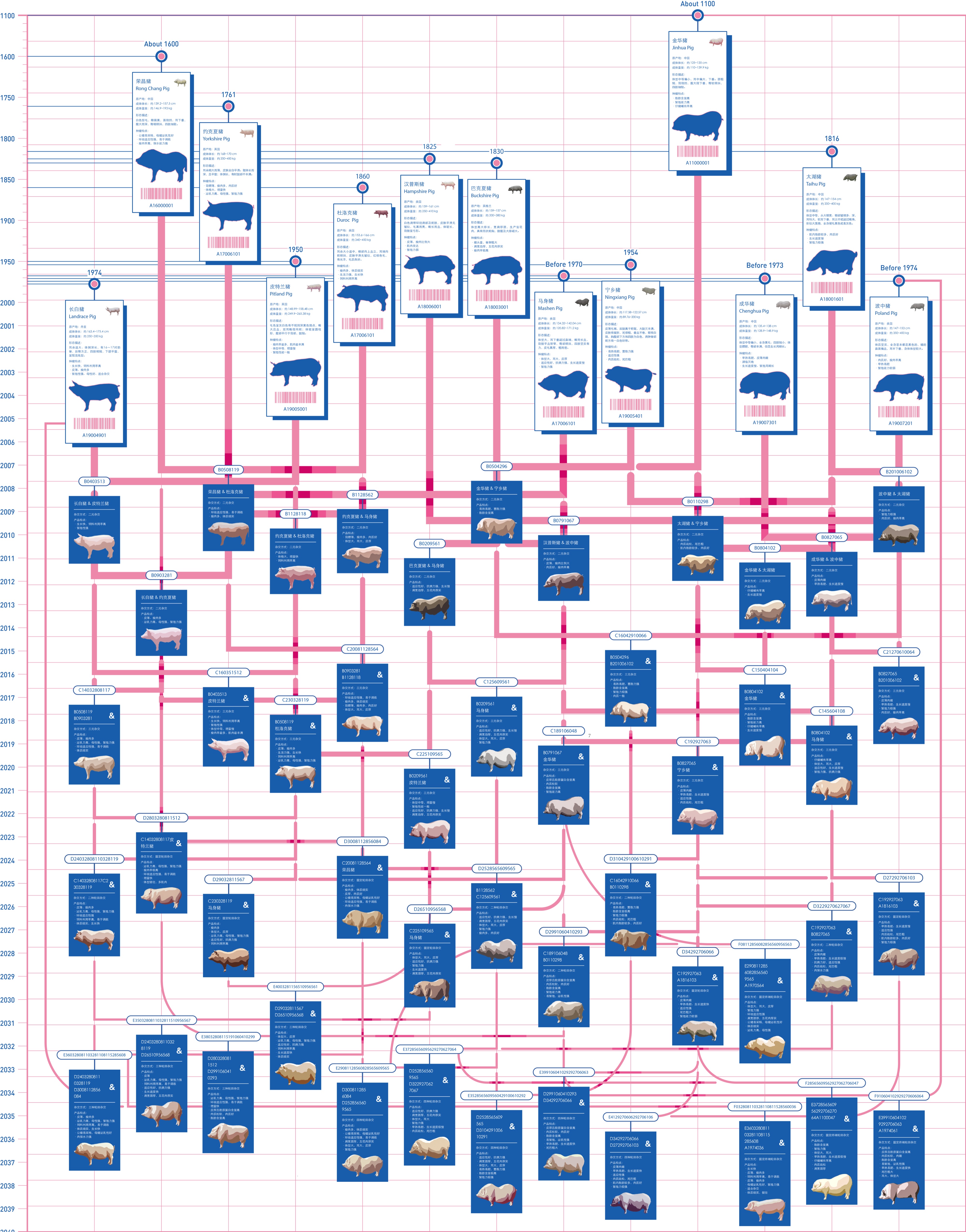
Existing pig breeds form the starting points of an imagined lineage. Successive pairings project selected traits across generations, tracing how bodies might be progressively shaped around human requirements. The branching diagram presents descent as a managed process in which ancestry becomes a resource for future production.
Codes, trait descriptions and recorded parentage give each animal a position within this system. The genealogy makes visible the cumulative logic of selection, showing how repeated decisions about desirable characteristics organise biological variation around commercial priorities.
Bodies to order
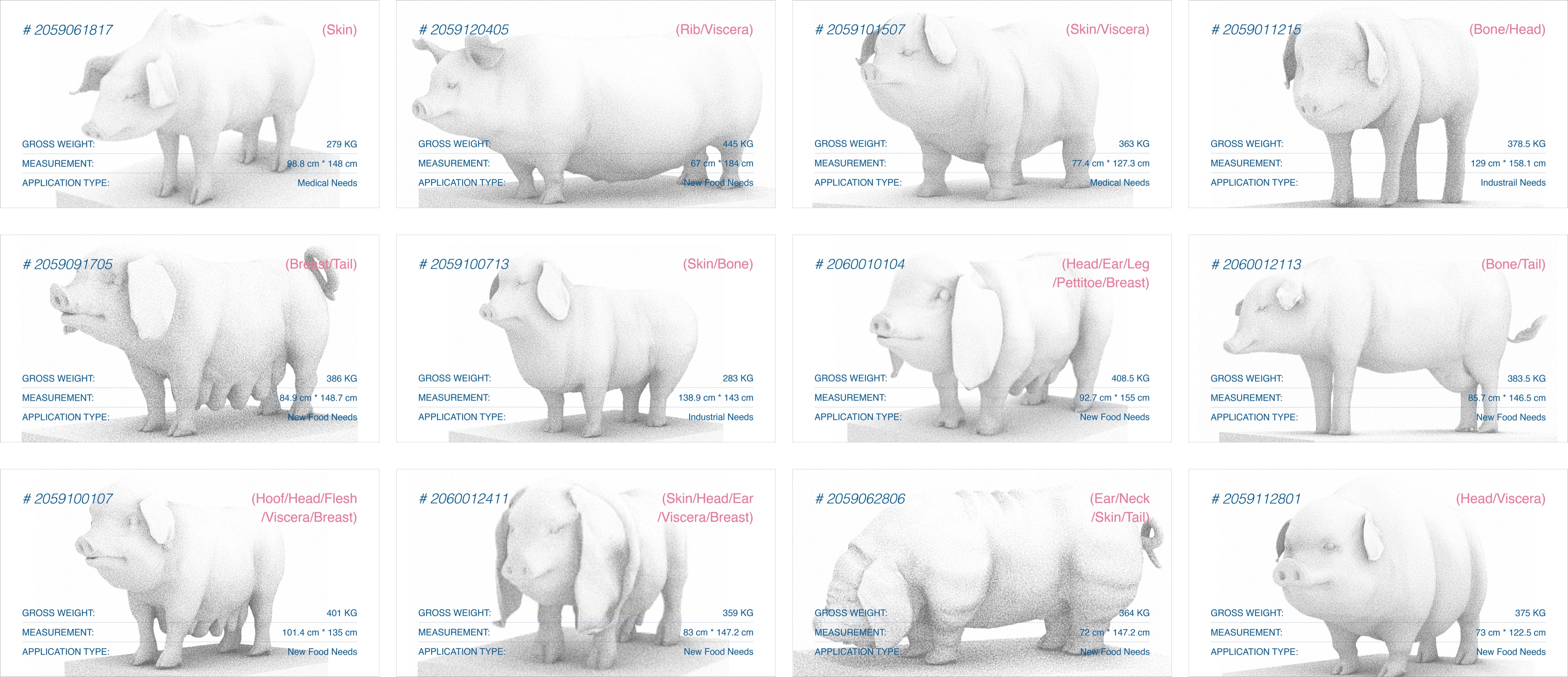
The catalogue translates imagined medical, industrial and food-related demands into a series of customised bodies. Enlarged proportions and exaggerated anatomical features register the priorities assigned to each animal, presenting bodily variation as a set of commercially desirable attributes.
Order numbers, dimensions and application categories place each body within a standardised product format. The apparent neutrality of the catalogue makes anatomical excess legible as specification, exposing a system in which living beings are evaluated through their capacity to fulfil an order.

Pig, cow, tuna
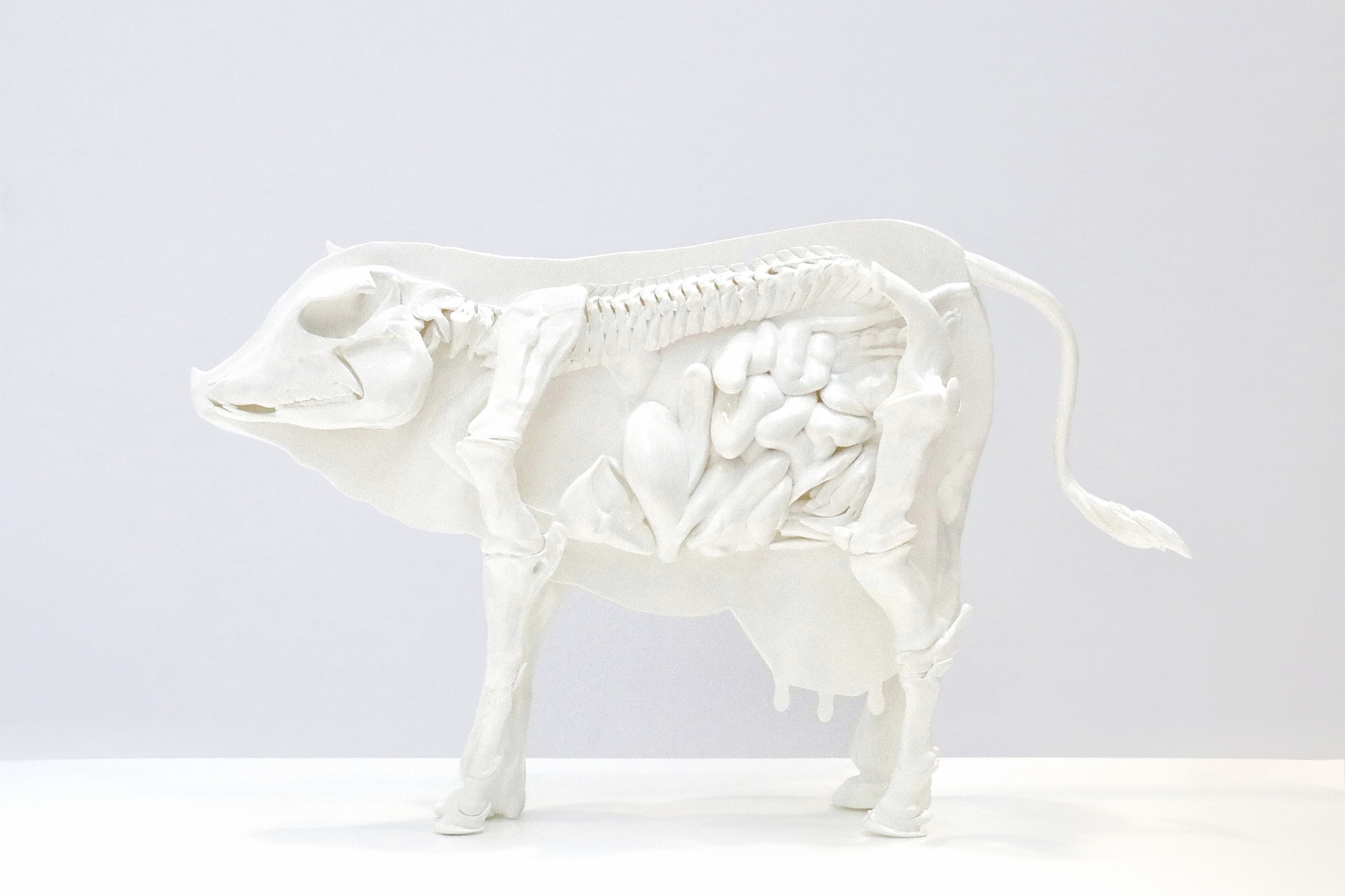
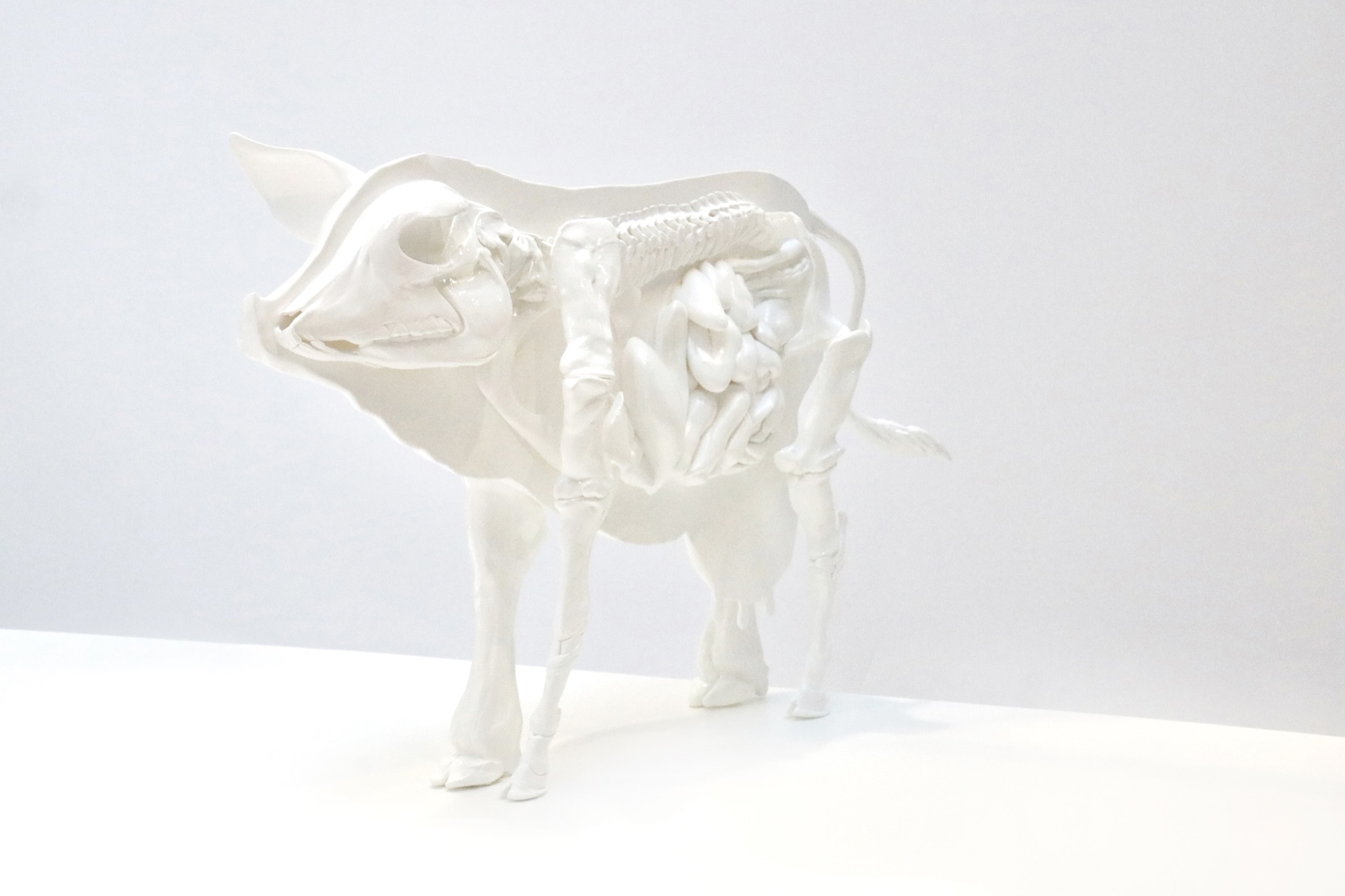
A fictional commission calls for collagen-rich skin, increased milk production and organs intended for transplantation. Picowgtuna translates these requirements into an imagined anatomy, combining traits associated with pigs, cattle and tuna within a single body.
Organs, mammary structures and skin become configurable components, each assigned a productive function. The resulting organism extends the catalogue’s logic beyond selective breeding, treating species boundaries as negotiable in the pursuit of commercial utility.
Parts of value
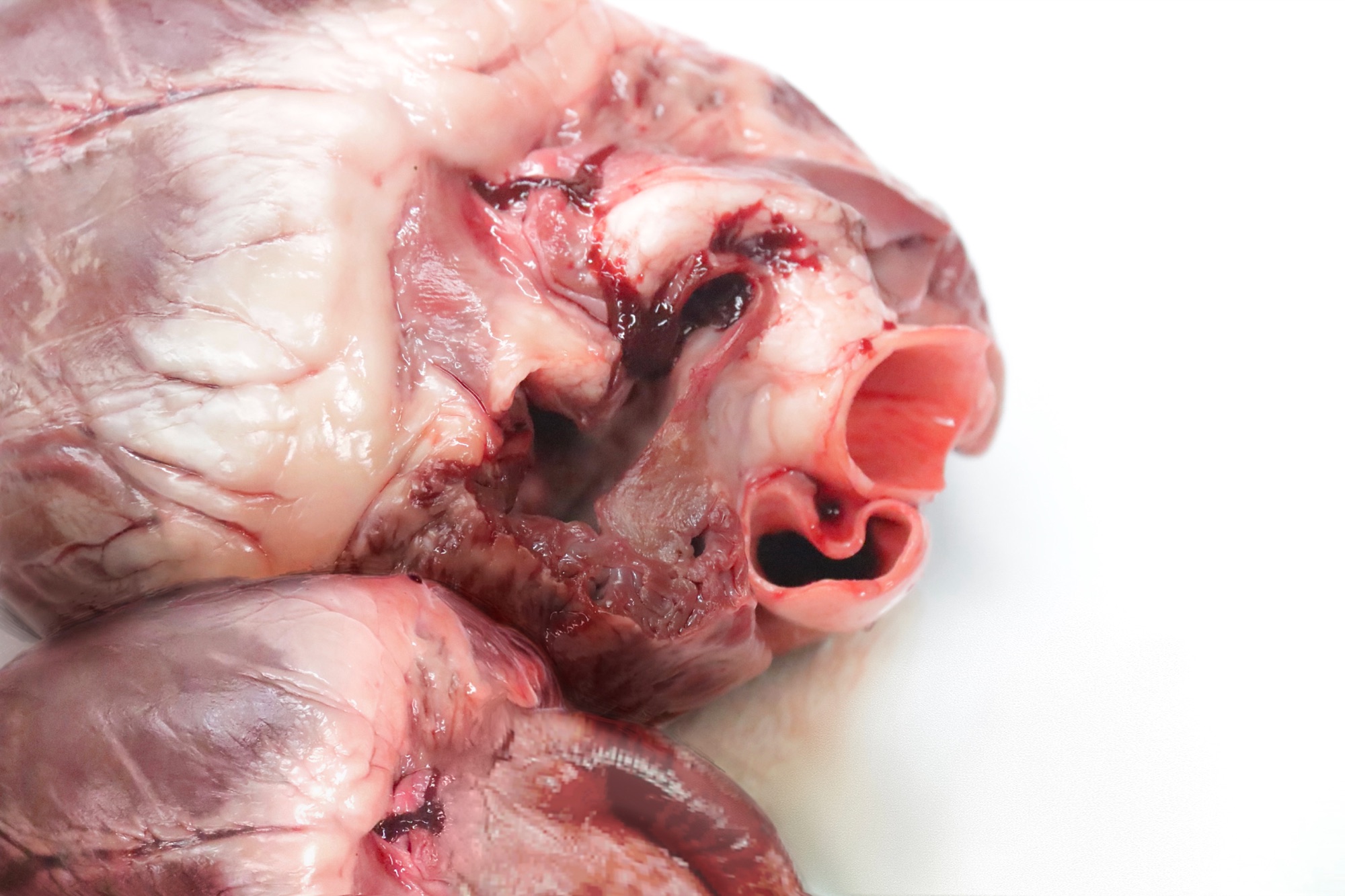
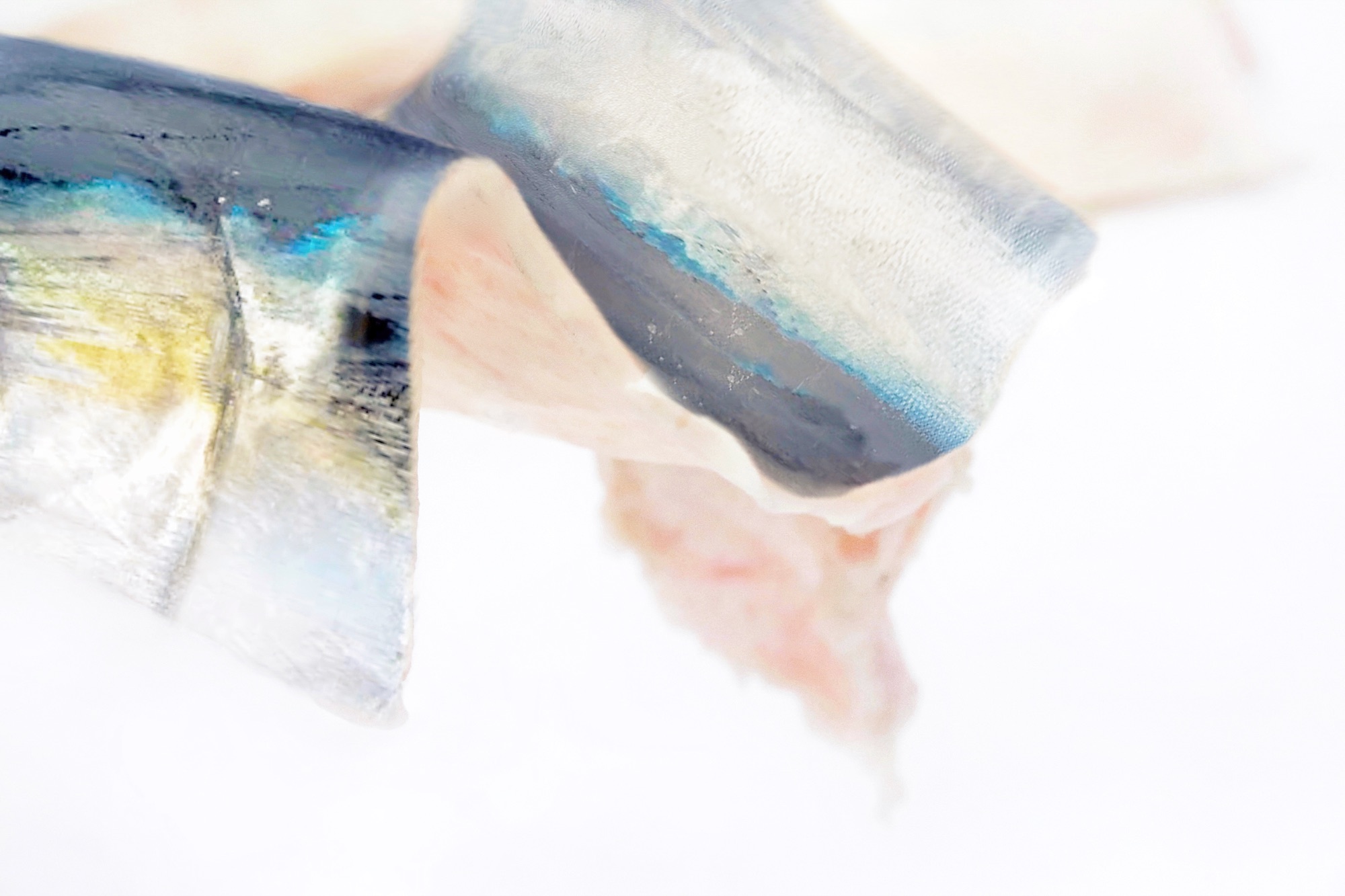
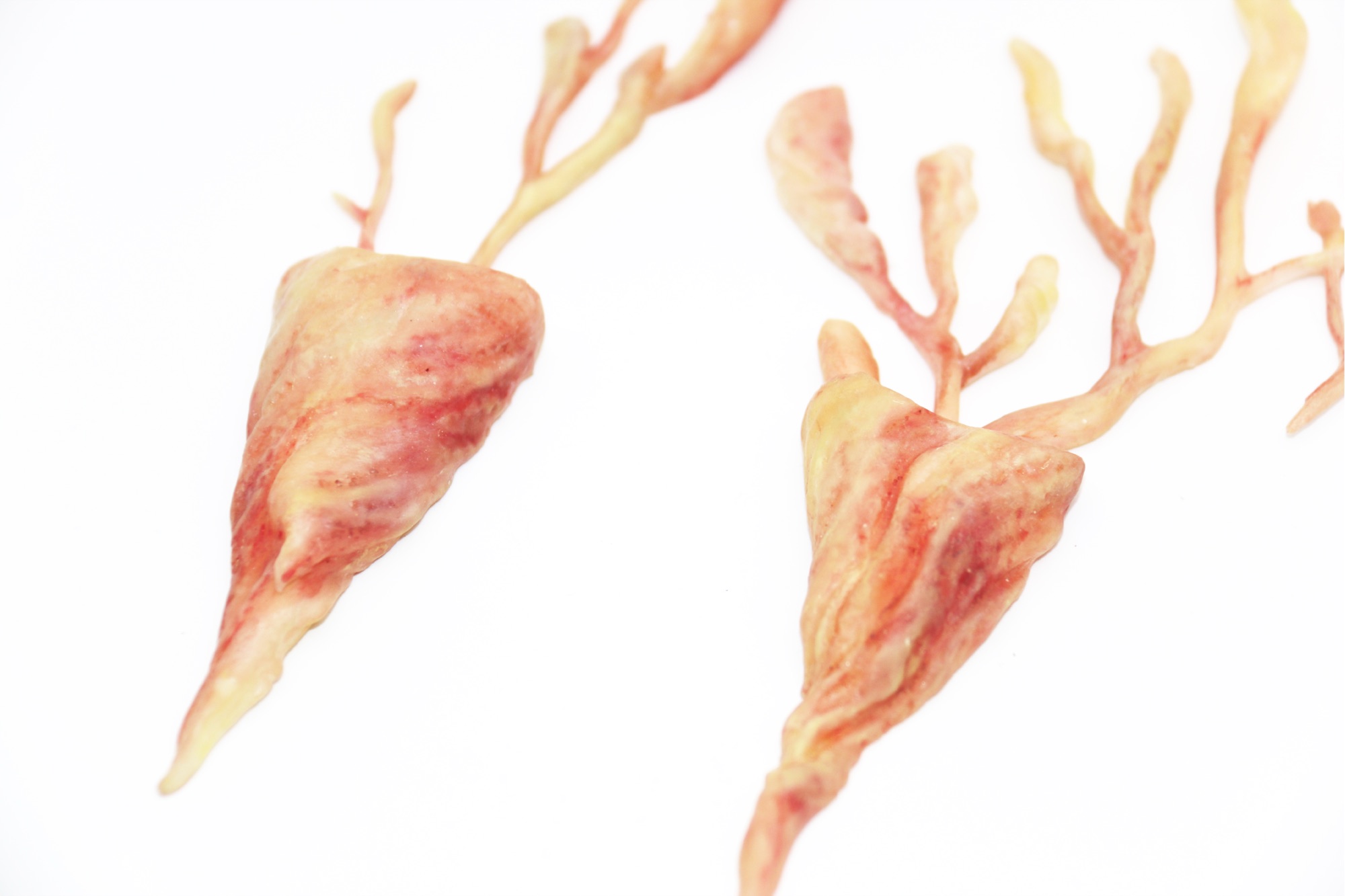
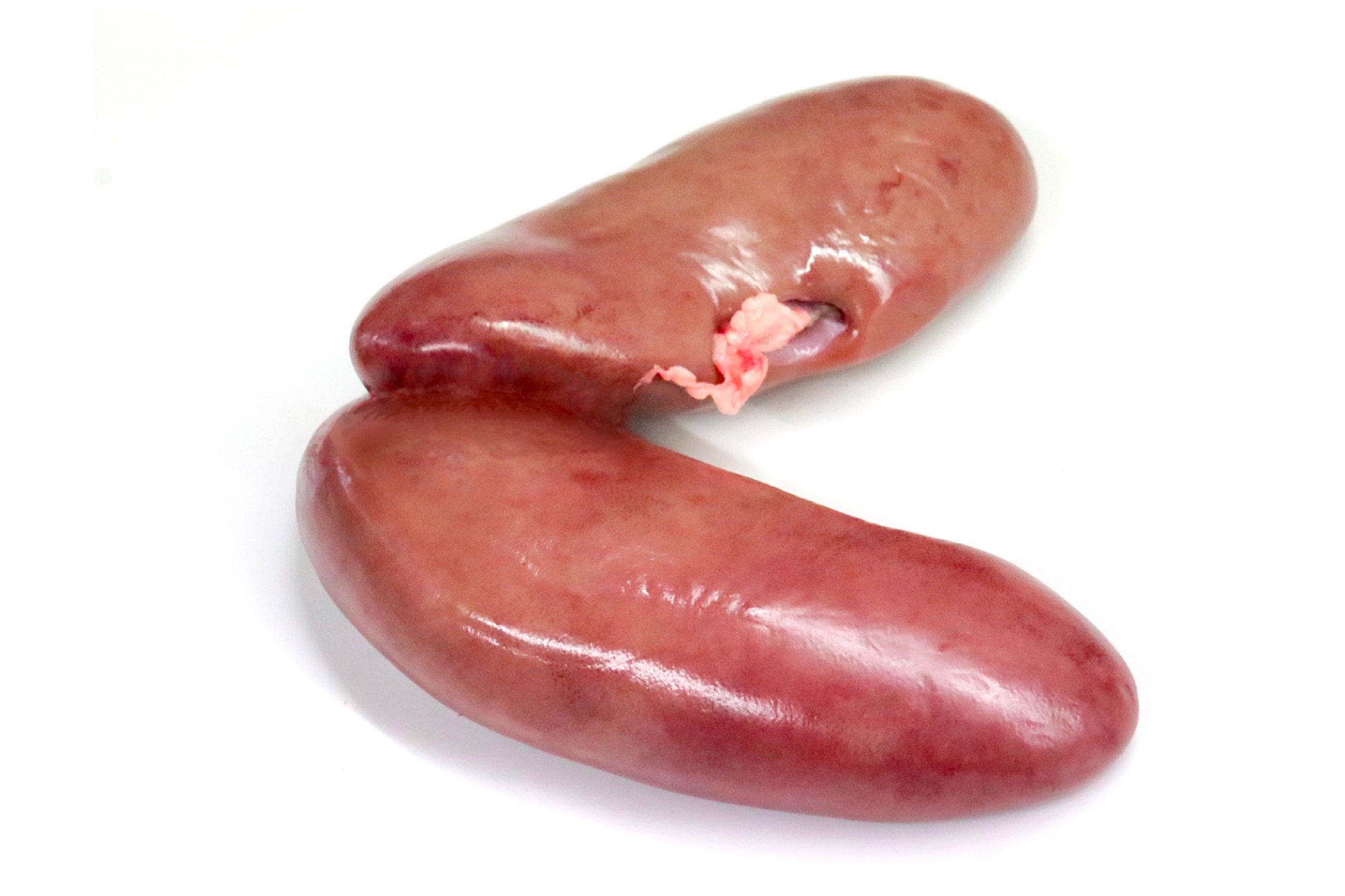
The imagined anatomy is developed through physical models of organs, skin and mammary structures. Within the fictional commission, the heart and kidney represent a demand for transplantable tissue, while the mammary glands and tuna-inspired skin address milk and collagen production. Each component translates an assigned function into a tangible bodily form.
Glossy surfaces, irregular contours and tissue-like colour give these objects a visceral presence absent from the catalogue. Presented separately, they shift attention from the animal’s overall silhouette to the parts through which its value is calculated, bringing the bodily implications of customisation into view.
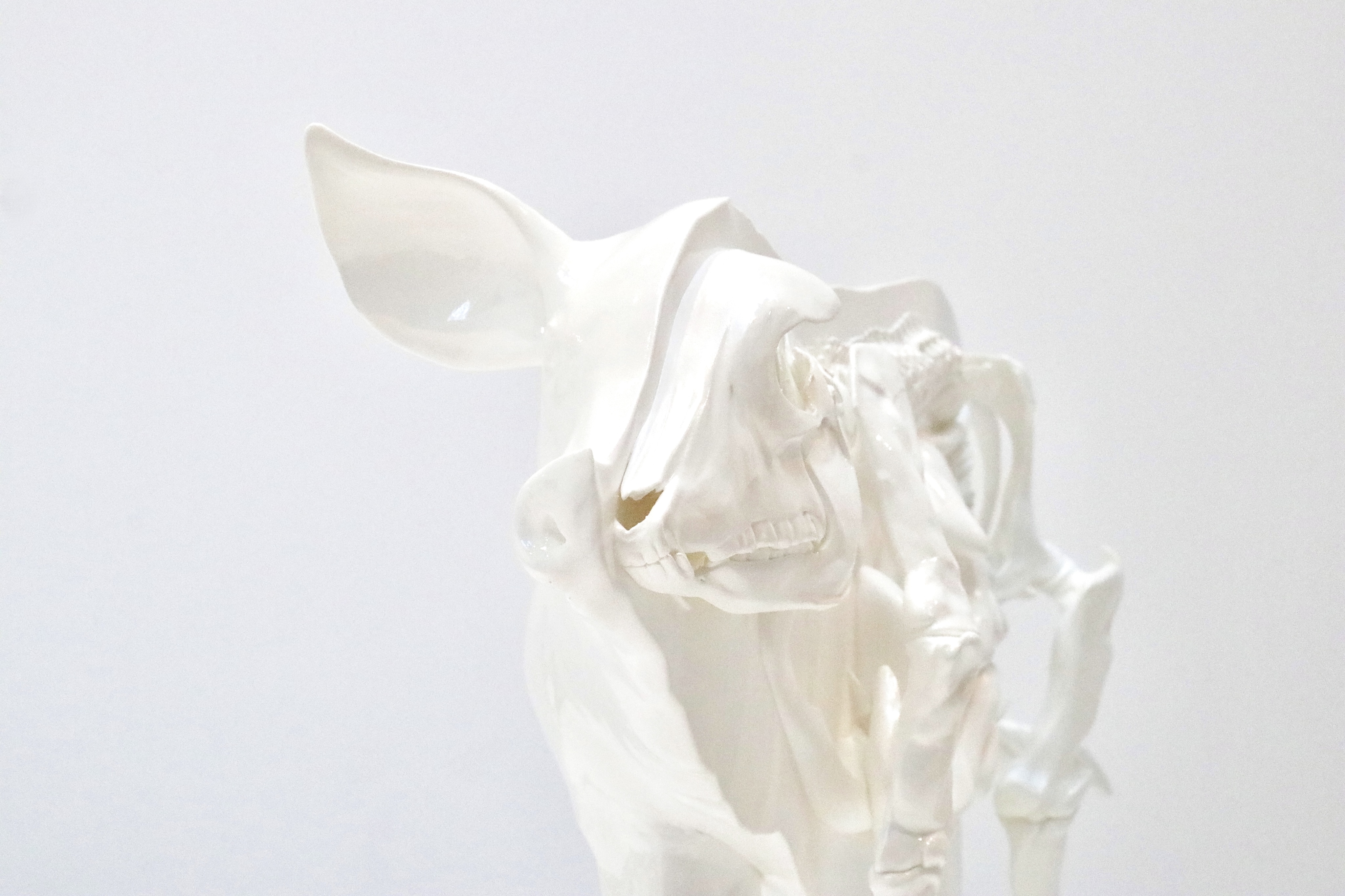
Picowgtuna
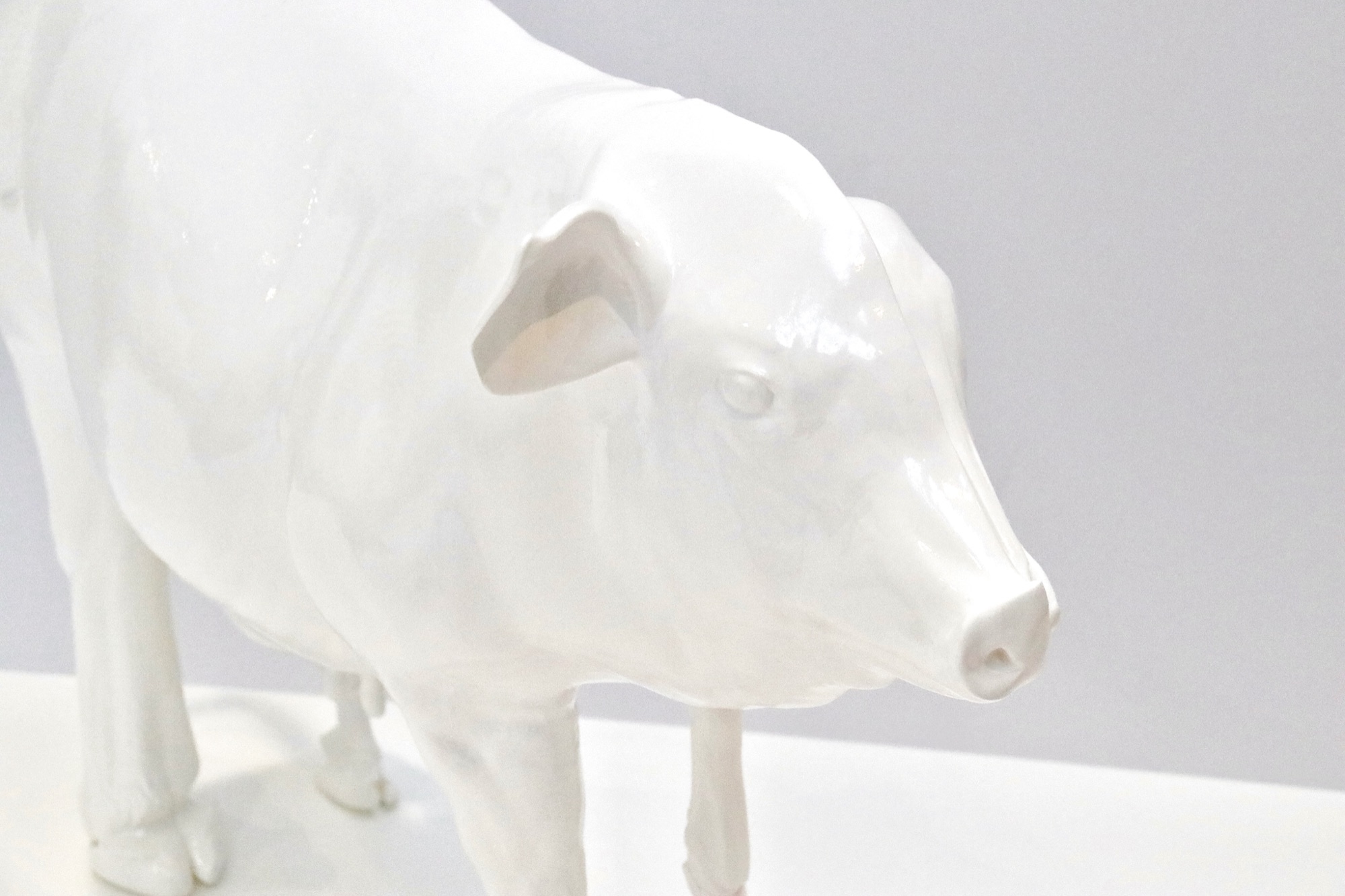
The final sculpture brings the speculative anatomy into a single body. A continuous white finish unifies its exterior, skeleton and internal organs, while the cutaway flank exposes the arrangement beneath an otherwise familiar silhouette. Positioned between an anatomical teaching model and a commercial display object, Picowgtuna holds the recognisable animal and its imagined productive functions in the same view.
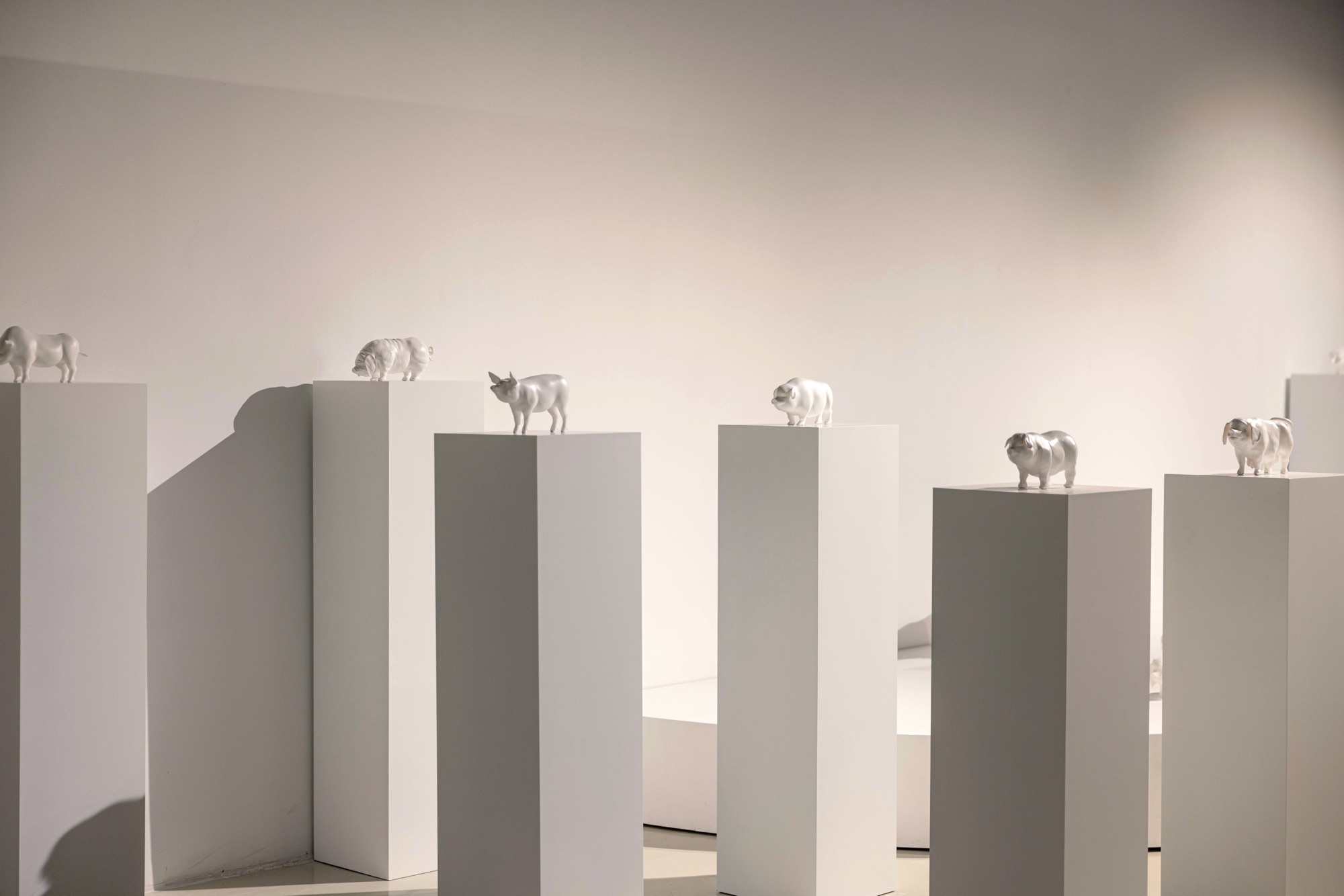
Bodies in series
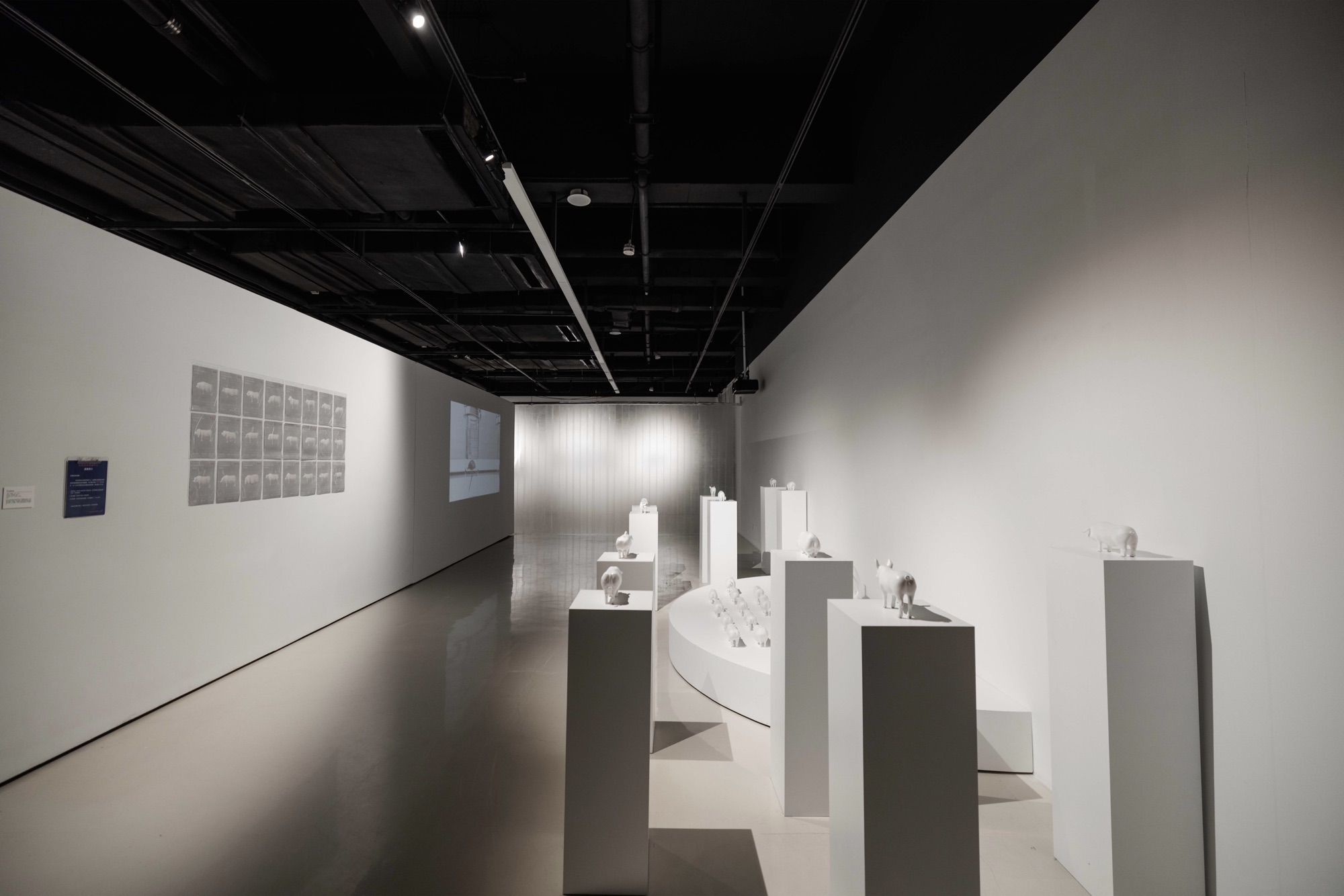
The catalogue takes spatial form as a series of sculptural bodies. Individual plinths separate each animal for inspection, while repetition draws attention to variations in proportion and anatomy. Seen together, the models reveal customisation as a system rather than an isolated intervention, with each body shaped by a different specification.
Junpeng Liang, 2022
With Weixi Kuang, Ziyi Qiu and Fei Liu